API Integration: Building Seamless Connections Between Modern Applications
Modern applications are no longer standalone systems. They rely on multiple services, platforms, and tools working together in real time. From payment processing and authentication to analytics and notifications, API integration makes this connectivity possible.
As businesses scale and adopt cloud-native and microservices-based architectures, APIs become the primary method for enabling communication between systems. Rel... moreAPI Integration: Building Seamless Connections Between Modern Applications
Modern applications are no longer standalone systems. They rely on multiple services, platforms, and tools working together in real time. From payment processing and authentication to analytics and notifications, API integration makes this connectivity possible.
As businesses scale and adopt cloud-native and microservices-based architectures, APIs become the primary method for enabling communication between systems. Reliable API integration ensures data flows smoothly, services remain synchronized, and users experience consistent performance across platforms.
What’s New: Understanding Extensibility in Modern Software
As software systems continue to evolve rapidly, extensibility has become a core design requirement rather than an optional feature.
Clearer Definition for Modern Architectures
Extensibility now goes beyond basic modularity, focusing on building systems that allow new features to be added without changing existing code. Learn more about what does extensible mean
in today’s software landscape.
Stronger Focus on API-Driven Design
Mod... moreWhat’s New: Understanding Extensibility in Modern Software
As software systems continue to evolve rapidly, extensibility has become a core design requirement rather than an optional feature.
Clearer Definition for Modern Architectures
Extensibility now goes beyond basic modularity, focusing on building systems that allow new features to be added without changing existing code. Learn more about what does extensible mean
in today’s software landscape.
Stronger Focus on API-Driven Design
Modern extensible systems rely heavily on well-defined APIs, making it easier to extend functionality across services, platforms, and third-party integrations.
Better Support for Plugins and Modules
Applications are increasingly adopting plugin-based and modular architectures to enable safe, scalable extensions.
Alignment with Cloud-Native Development
Extensibility now plays a key role in microservices, SaaS platforms, and cloud-native systems, where continuous evolution is expected.
Reduced Technical Debt
By designing for extensibility early, teams can avoid large refactors and adapt to new requirements with minimal risk.
Test cases are the backbone of effective software testing. They act as detailed instructions that testers follow to verify whether a feature works as expected. Well-written test cases ensure...
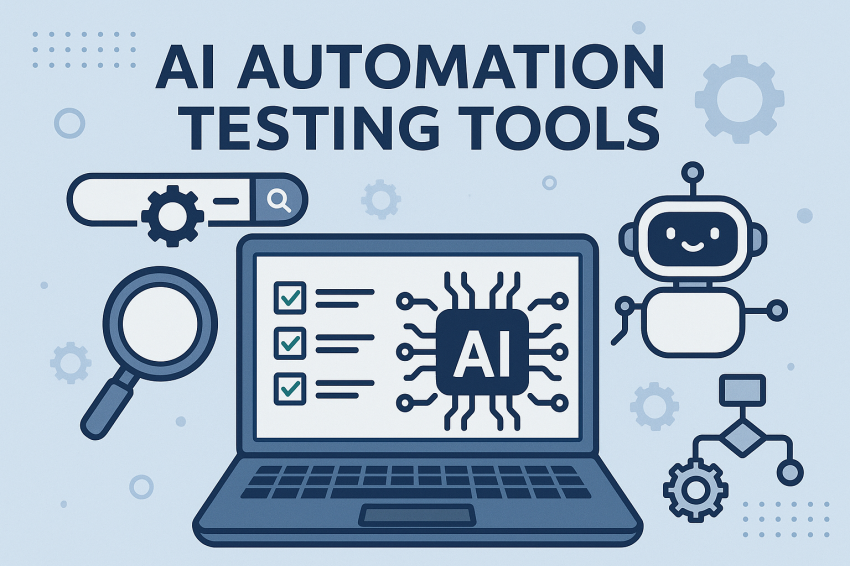
AI-powered testing has become essential for modern QA and DevOps teams. With faster releases, microservices, distributed systems, and complex user flows, traditional automation often fails to keep...