Virtual Influencers Market Report: The Convergence of AI, Creativity, and Commerce
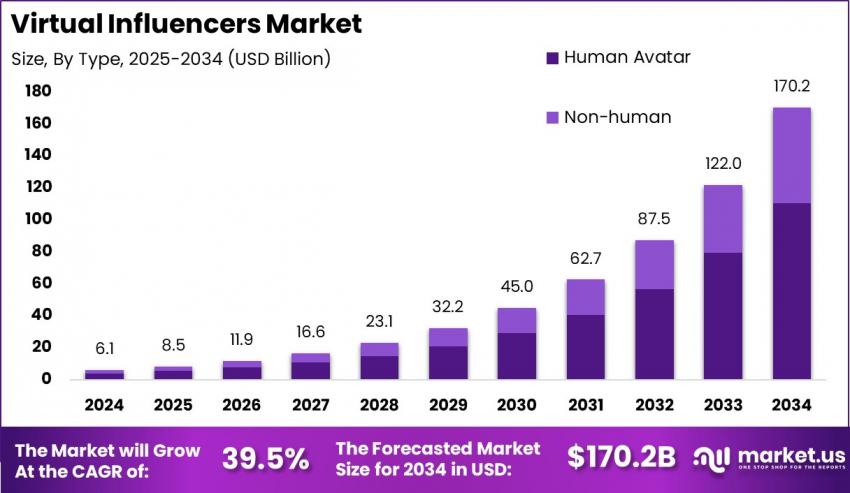
The Virtual Influencers Market report highlights a significant evolution in the digital marketing space, where artificial intelligence is transforming not just how content is created, but who creates it. Virtual influencers—AI-powered digital characters—are rapidly becoming a strategic tool for brands seeking innovative ways to engage audiences and differentiate themselves in a crowded online environment.
These ... moreVirtual Influencers Market Report: The Convergence of AI, Creativity, and Commerce
The Virtual Influencers Market report highlights a significant evolution in the digital marketing space, where artificial intelligence is transforming not just how content is created, but who creates it. Virtual influencers—AI-powered digital characters—are rapidly becoming a strategic tool for brands seeking innovative ways to engage audiences and differentiate themselves in a crowded online environment.
These virtual personalities are built using technologies such as AI, CGI, and advanced animation. They are programmed to behave like human influencers—sharing posts, interacting with followers, and promoting products—while offering brands complete control over their image and messaging. This level of control is one of the main reasons behind their growing adoption.
A key insight from the Virtual Influencers Market report is the rising importance of content consistency and brand alignment. In traditional influencer marketing, brands often face challenges related to unpredictability and misalignment. Virtual influencers eliminate these risks by ensuring that every piece of content aligns perfectly with brand values and campaign goals.
Another major factor driving the market is the demand for scalable marketing solutions. Virtual influencers can operate across multiple platforms simultaneously, engage with audiences in different regions, and maintain a continuous online presence. This makes them especially valuable for global brands looking to streamline their digital strategies.
However, the report also emphasizes the importance of authenticity and transparency. While virtual influencers are highly effective in capturing attention, they may struggle to build deep emotional connections with audiences. Consumers increasingly value honesty, and brands must clearly communicate the artificial nature of these digital personas to maintain trust.
Looking ahead, the Virtual Influencers Market report suggests that the future will be shaped by integration with emerging technologies such as augmented reality (AR), virtual reality (VR), and immersive digital environments. These advancements will enable more interactive and engaging experiences, allowing virtual influencers to play a central role in the next generation of digital engagement.
In conclusion, virtual influencers represent a powerful fusion of technology and creativity. As the market continues to grow, they are expected to complement human influencers, creating a balanced ecosystem where innovation and authenticity work hand in hand.
🔗 https://market.us/report/virtual-influencers-market/
Virtual Influencers Market Report: The Convergence of AI, Creativity, and Commerce
The Virtual Influencers Market report highlights a significant evolution in the digital marketing space, where artificial intelligence is transforming not just how content is created, but who creates it. Virtual influencers—AI-powered digital characters—are rapidly becoming a strategic tool for brands seeking innovative ways to engage audiences and differentiate themselves in a crowded online environment.
These ... moreVirtual Influencers Market Report: The Convergence of AI, Creativity, and Commerce
The Virtual Influencers Market report highlights a significant evolution in the digital marketing space, where artificial intelligence is transforming not just how content is created, but who creates it. Virtual influencers—AI-powered digital characters—are rapidly becoming a strategic tool for brands seeking innovative ways to engage audiences and differentiate themselves in a crowded online environment.
These virtual personalities are built using technologies such as AI, CGI, and advanced animation. They are programmed to behave like human influencers—sharing posts, interacting with followers, and promoting products—while offering brands complete control over their image and messaging. This level of control is one of the main reasons behind their growing adoption.
A key insight from the Virtual Influencers Market report is the rising importance of content consistency and brand alignment. In traditional influencer marketing, brands often face challenges related to unpredictability and misalignment. Virtual influencers eliminate these risks by ensuring that every piece of content aligns perfectly with brand values and campaign goals.
Another major factor driving the market is the demand for scalable marketing solutions. Virtual influencers can operate across multiple platforms simultaneously, engage with audiences in different regions, and maintain a continuous online presence. This makes them especially valuable for global brands looking to streamline their digital strategies.
However, the report also emphasizes the importance of authenticity and transparency. While virtual influencers are highly effective in capturing attention, they may struggle to build deep emotional connections with audiences. Consumers increasingly value honesty, and brands must clearly communicate the artificial nature of these digital personas to maintain trust.
Looking ahead, the Virtual Influencers Market report suggests that the future will be shaped by integration with emerging technologies such as augmented reality (AR), virtual reality (VR), and immersive digital environments. These advancements will enable more interactive and engaging experiences, allowing virtual influencers to play a central role in the next generation of digital engagement.
In conclusion, virtual influencers represent a powerful fusion of technology and creativity. As the market continues to grow, they are expected to complement human influencers, creating a balanced ecosystem where innovation and authenticity work hand in hand.
🔗 https://market.us/report/virtual-influencers-market/
AI in Military Market Report: Accelerating Defense Innovation with Smart Technologies
The AI in Military Market report highlights the growing role of artificial intelligence in reshaping global defense systems. As modern warfare becomes increasingly complex and technology-driven, AI is helping military organizations enhance operational efficiency, strengthen security, and respond to threats with greater precision. This shift toward intelligent systems is enabling faster decision-making and impr... moreAI in Military Market Report: Accelerating Defense Innovation with Smart Technologies
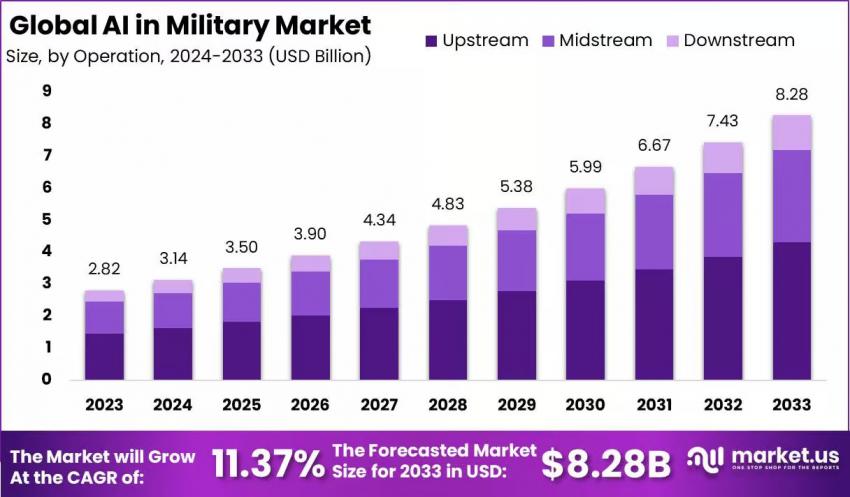
The AI in Military Market report highlights the growing role of artificial intelligence in reshaping global defense systems. As modern warfare becomes increasingly complex and technology-driven, AI is helping military organizations enhance operational efficiency, strengthen security, and respond to threats with greater precision. This shift toward intelligent systems is enabling faster decision-making and improved mission outcomes.
One of the key advantages of AI in the military sector is its ability to process large volumes of data quickly and accurately. Information gathered from satellites, drones, and surveillance systems can be analyzed in real time, allowing defense forces to detect threats early and act decisively. This improved situational awareness plays a crucial role in high-stakes environments.
The report also points to the rapid adoption of autonomous technologies. AI-powered unmanned aerial vehicles, robotic ground systems, and naval platforms are being used for reconnaissance, monitoring, and support operations. These systems reduce human exposure to danger while delivering consistent and precise performance.
Cybersecurity is another major focus area. With increasing reliance on digital infrastructure, military networks are more vulnerable to cyber threats. AI-driven security tools help identify unusual patterns, prevent attacks, and ensure the protection of sensitive information and communication systems.
In addition, AI is transforming logistics by optimizing supply chains, predicting maintenance needs, and improving resource allocation. This ensures that military units remain well-prepared and operationally efficient at all times.
In conclusion, the AI in Military Market report demonstrates how artificial intelligence is driving innovation and strengthening defense capabilities worldwide. As investments continue to grow, AI will remain a key factor in shaping the future of military operations and global security.
Read more: https://market.us/report/artificial-intelligence-in-military-market/
India Communication Platform as a Service (CPaaS) Market Report: Accelerating Cloud-Based Communication
The India Communication Platform as a Service (CPaaS) Market report highlights the rapid shift toward cloud-powered communication solutions across industries. As businesses in India embrace digital transformation, CPaaS is becoming a crucial tool for enabling seamless, real-time interactions with customers.
CPaaS provides a flexible platform that allows companies to integrate messaging, voic... moreIndia Communication Platform as a Service (CPaaS) Market Report: Accelerating Cloud-Based Communication
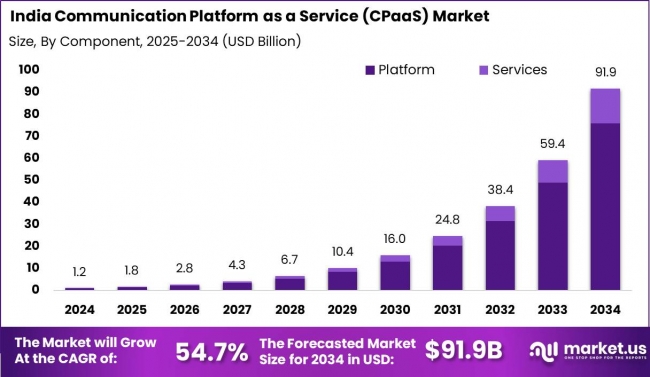
The India Communication Platform as a Service (CPaaS) Market report highlights the rapid shift toward cloud-powered communication solutions across industries. As businesses in India embrace digital transformation, CPaaS is becoming a crucial tool for enabling seamless, real-time interactions with customers.
CPaaS provides a flexible platform that allows companies to integrate messaging, voice, and video services into their applications using APIs. This eliminates the need for traditional communication infrastructure and enables faster deployment of services. Businesses can scale communication capabilities as needed, making CPaaS a cost-efficient and agile solution.
A major takeaway from the India Communication Platform as a Service (CPaaS) Market report is the increasing demand for instant and personalized communication. Customers expect quick responses and consistent experiences across channels such as SMS, mobile apps, and web platforms. CPaaS helps businesses meet these expectations by offering unified and automated communication systems.
The growth of India’s digital ecosystem is further boosting the adoption of CPaaS. With rising smartphone penetration and affordable data services, businesses are reaching a wider audience through digital platforms. Industries like BFSI, retail, and healthcare are actively using CPaaS for transaction alerts, marketing campaigns, and customer engagement.
Technological advancements are also playing a key role in shaping the market. The integration of artificial intelligence and automation is enabling features like chatbots, smart routing, and real-time analytics. These innovations improve efficiency and allow businesses to deliver more personalized and responsive services.
Despite its strong growth potential, the market faces challenges such as data privacy concerns and integration with legacy systems. However, ongoing advancements in security and compliance are expected to address these issues over time.
In conclusion, the India Communication Platform as a Service (CPaaS) Market report underscores the importance of scalable, intelligent communication solutions in helping businesses stay competitive and connected in an increasingly digital world.
Digital Labor Market Report: Key Trends and Insights
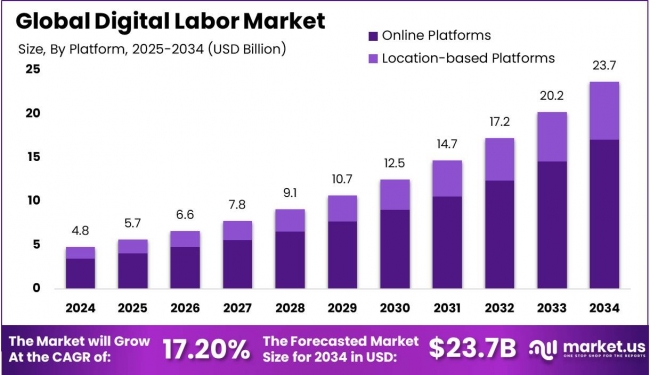
The Digital Labor Market report provides valuable insights into how technology is transforming the global workforce. Organizations are increasingly adopting AI-driven tools and cloud-based solutions to streamline operations and enhance efficiency. This trend is helping businesses remain competitive in a fast-changing environment.
A major driver of this market is the growing need for cost optimization. Digital labor solutions allow companies ... moreDigital Labor Market Report: Key Trends and Insights
The Digital Labor Market report provides valuable insights into how technology is transforming the global workforce. Organizations are increasingly adopting AI-driven tools and cloud-based solutions to streamline operations and enhance efficiency. This trend is helping businesses remain competitive in a fast-changing environment.
A major driver of this market is the growing need for cost optimization. Digital labor solutions allow companies to automate routine processes, reducing the need for large in-house teams. At the same time, these technologies improve accuracy and speed, leading to better overall performance.
Another significant trend is the integration of data analytics into business operations. AI-powered systems can process vast amounts of data and generate actionable insights, enabling organizations to make informed decisions. This capability is particularly valuable in industries such as finance, healthcare, and retail.
Despite its benefits, the market faces challenges such as regulatory uncertainties and the need for workforce reskilling. Companies must invest in training programs to ensure employees can adapt to new technologies and roles.
Global Travel eSIM Market: Connecting Travelers in a Digital-First World
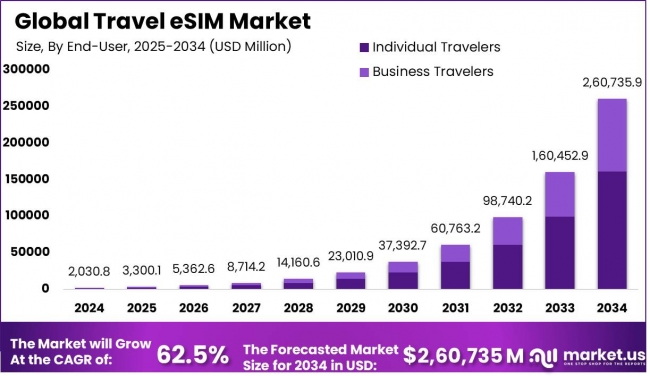
The Global Travel eSIM Market is rapidly transforming the way people stay connected while traveling across borders. With the growing reliance on smartphones and digital services, travelers now expect instant and reliable internet access wherever they go. According to the latest Travel eSIM Market report, this demand is driving strong growth in eSIM adoption worldwide.
eSIM, or embedded SIM, is a digital solution that allo... moreGlobal Travel eSIM Market: Connecting Travelers in a Digital-First World
The Global Travel eSIM Market is rapidly transforming the way people stay connected while traveling across borders. With the growing reliance on smartphones and digital services, travelers now expect instant and reliable internet access wherever they go. According to the latest Travel eSIM Market report, this demand is driving strong growth in eSIM adoption worldwide.
eSIM, or embedded SIM, is a digital solution that allows users to activate mobile data plans without inserting a physical SIM card. This technology offers unmatched convenience, enabling travelers to switch networks and access local data plans with just a few taps on their devices. It removes the hassle of purchasing SIM cards in foreign countries and avoids expensive roaming charges.
One of the major advantages of the Global Travel eSIM Market is its flexibility. Users can choose from a variety of plans based on their destination, duration of stay, and data needs. This level of customization makes eSIMs highly attractive to modern travelers who value control and efficiency.
Affordability is another key factor highlighted in the Travel eSIM Market report. Compared to traditional roaming services, eSIM plans offer competitive pricing and transparent billing. This helps travelers manage their expenses more effectively, especially during long trips or frequent travel.
The market is also benefiting from the increasing number of eSIM-compatible devices. Leading smartphone manufacturers are integrating this technology into their products, making it more accessible to consumers. As device adoption grows, the Global Travel eSIM Market is expected to expand significantly.
Additionally, the rise of remote work and digital nomadism is boosting demand for global connectivity solutions. Professionals working from different locations require reliable internet access, and travel eSIMs provide a seamless way to stay connected across multiple regions.
From a regional perspective, Asia-Pacific dominates the market due to high smartphone usage and increasing international travel. North America and Europe are also key contributors, supported by advanced telecom infrastructure and strong consumer awareness.
In conclusion, the Global Travel eSIM Market is reshaping international connectivity by offering a smarter, faster, and more cost-effective solution. As technology continues to evolve, eSIMs are set to become an essential tool for travelers worldwide.
AI in Video Surveillance Market Report: Redefining Security with Data-Driven Intelligence
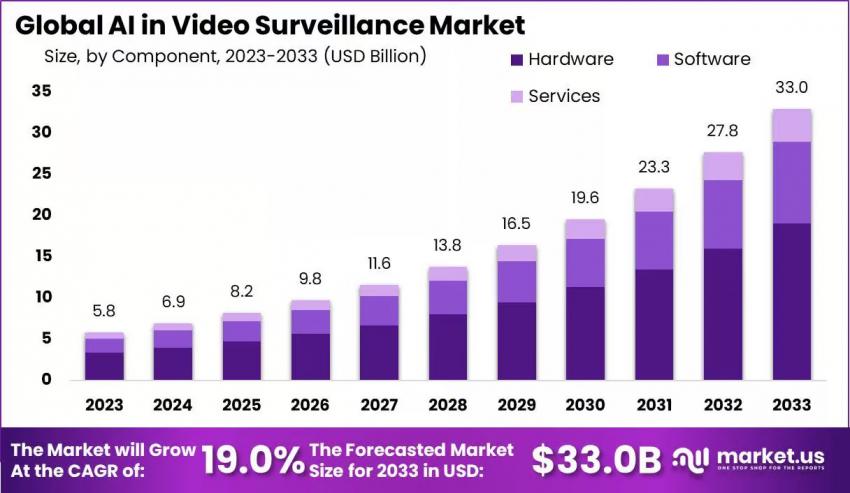
The AI in Video Surveillance Market report explains how artificial intelligence is transforming surveillance into a smarter, data-driven function. Instead of simply capturing video, modern systems are designed to interpret and act on information instantly—helping organizations respond faster and operate more efficiently.
AI-powered surveillance systems can identify unusual activities, detect motion patter... moreAI in Video Surveillance Market Report: Redefining Security with Data-Driven Intelligence
The AI in Video Surveillance Market report explains how artificial intelligence is transforming surveillance into a smarter, data-driven function. Instead of simply capturing video, modern systems are designed to interpret and act on information instantly—helping organizations respond faster and operate more efficiently.
AI-powered surveillance systems can identify unusual activities, detect motion patterns, recognize faces, and track objects in real time. This shift toward automated monitoring reduces dependence on human oversight and minimizes the chances of missed incidents. As a result, businesses and governments are increasingly adopting these solutions to strengthen security and improve situational awareness.
One of the key growth factors highlighted in the report is the expansion of smart infrastructure. Cities are deploying AI-enabled cameras for traffic flow management, crowd control, and public safety. At the same time, industries such as retail and logistics are using surveillance analytics to gain operational insights, such as customer behavior and workflow efficiency.
Technological advancements continue to push the market forward. Edge computing allows faster, on-device processing, while cloud-based platforms enable remote monitoring and scalable storage. These innovations make AI surveillance systems more adaptable to different business needs.
However, challenges remain. Concerns around privacy, data handling, and regulatory compliance are becoming more prominent. Additionally, the initial investment required for advanced AI systems can limit adoption among smaller organizations.
Overall, the AI in Video Surveillance Market report highlights a clear shift toward intelligent, responsive security solutions. As technology matures, AI surveillance will play an increasingly important role in creating safer, more efficient environments.
Global Creator Economy in Gaming Market Size Expands with Creator Monetization
Keywords: Global Creator Economy in Gaming Market Size, Creator Economy in Gaming Market Report
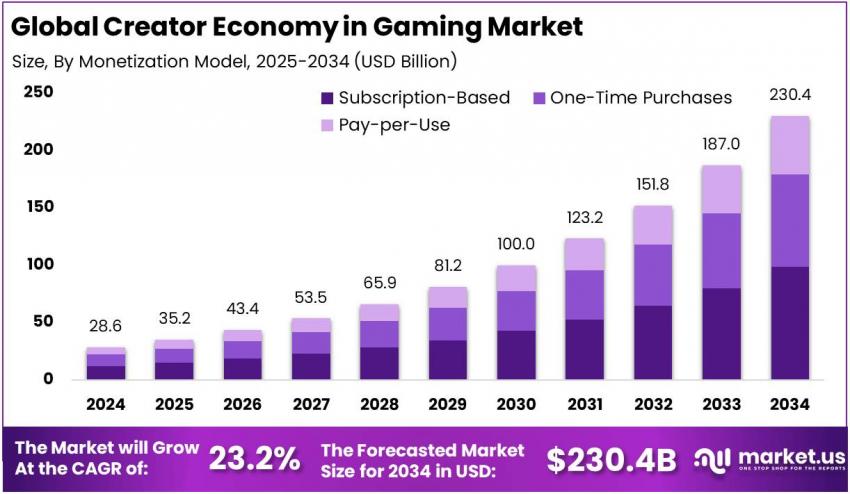
The Global Creator Economy in Gaming Market Size is witnessing strong growth as creators explore new ways to monetize gaming content. The Creator Economy in Gaming Market Report emphasizes the importance of diverse revenue streams.
Projected to reach USD 230.4 billion by 2034, the market is growing at a 23.2% CAGR. This ... moreGlobal Creator Economy in Gaming Market Size Expands with Creator Monetization
Keywords: Global Creator Economy in Gaming Market Size, Creator Economy in Gaming Market Report
The Global Creator Economy in Gaming Market Size is witnessing strong growth as creators explore new ways to monetize gaming content. The Creator Economy in Gaming Market Report emphasizes the importance of diverse revenue streams.
Projected to reach USD 230.4 billion by 2034, the market is growing at a 23.2% CAGR. This expansion is driven by increased content consumption and the popularity of digital platforms.
Creators earn through subscriptions, ads, sponsorships, and merchandise, making gaming content a viable career path. Streaming platforms continue to lead due to their interactive nature.
Esports has also played a major role, attracting sponsorships and boosting audience engagement. Meanwhile, technological advancements have simplified content creation.
Despite market challenges, the Global Creator Economy in Gaming Market Size is expected to maintain strong growth.
The eCommerce industry is rapidly evolving, and AI agents are playing a crucial role in this transformation. These intelligent systems are designed to automate tasks, analyze data, and interact with customers in real time. By integrating AI agents into their platforms, businesses can deliver faster, smarter, and more personalized shopping experiences.
One of the standout benefits of AI agents is their ability to enhance customer journeys. They provide instant responses, guide users through prod... moreThe eCommerce industry is rapidly evolving, and AI agents are playing a crucial role in this transformation. These intelligent systems are designed to automate tasks, analyze data, and interact with customers in real time. By integrating AI agents into their platforms, businesses can deliver faster, smarter, and more personalized shopping experiences.
One of the standout benefits of AI agents is their ability to enhance customer journeys. They provide instant responses, guide users through product selections, and offer tailored recommendations based on browsing behavior and purchase history. This level of personalization not only improves user satisfaction but also boosts conversion rates and customer loyalty.
In addition to improving front-end experiences, AI agents streamline backend operations. They assist with inventory tracking, demand forecasting, and order management, helping businesses operate more efficiently. By reducing manual intervention, companies can minimize errors and allocate resources more effectively.
AI agents also contribute to better decision-making. Through advanced data analysis, they uncover valuable insights into customer trends and preferences, enabling businesses to refine their strategies and stay competitive in a fast-changing market.
As digital commerce continues to expand, the role of AI agents will only become more significant. Companies that adopt these technologies early can gain a strong competitive advantage by delivering superior experiences and optimizing their operations.
Artificial Intelligence (AI) Market: Accelerating the Future of Digital Innovation
The Artificial Intelligence (AI) market is rapidly advancing as organizations seek smarter solutions to manage complex operations and growing data volumes. AI technologies are no longer limited to large tech firms; they are now widely adopted across industries to improve efficiency, accuracy, and decision-making. Insights from the latest Artificial Intelligence (AI) market report suggest that this sector will con... moreArtificial Intelligence (AI) Market: Accelerating the Future of Digital Innovation
The Artificial Intelligence (AI) market is rapidly advancing as organizations seek smarter solutions to manage complex operations and growing data volumes. AI technologies are no longer limited to large tech firms; they are now widely adopted across industries to improve efficiency, accuracy, and decision-making. Insights from the latest Artificial Intelligence (AI) market report suggest that this sector will continue to expand as innovation and adoption increase globally.
The Artificial Intelligence market is driven by the need for intelligent systems that can analyze data, recognize patterns, and automate processes. Businesses are increasingly using AI to enhance productivity and streamline workflows. This shift is particularly evident in industries that rely heavily on data, where AI tools provide faster and more reliable insights compared to traditional methods.
Another major factor influencing the Artificial Intelligence (AI) market is the growing importance of customer-centric strategies. Companies are leveraging AI to deliver personalized experiences, improve customer engagement, and optimize service delivery. From recommendation engines to virtual assistants, AI-powered solutions are helping businesses better understand and respond to customer needs.
The Artificial Intelligence market is also supported by continuous technological advancements. Improvements in computing power, algorithms, and data availability have made AI more efficient and accessible. These developments are encouraging organizations to integrate AI into their core operations, driving further market growth.
According to the Artificial Intelligence (AI) market report, the increasing use of AI in automation and predictive analytics is expected to shape the future of the industry. Businesses that adopt these technologies early will have a stronger ability to adapt to changing market conditions and maintain a competitive advantage.
Despite challenges such as regulatory concerns and skill gaps, the overall outlook for the Artificial Intelligence market remains strong. As AI continues to evolve, it will play a crucial role in transforming industries and driving long-term economic growth.
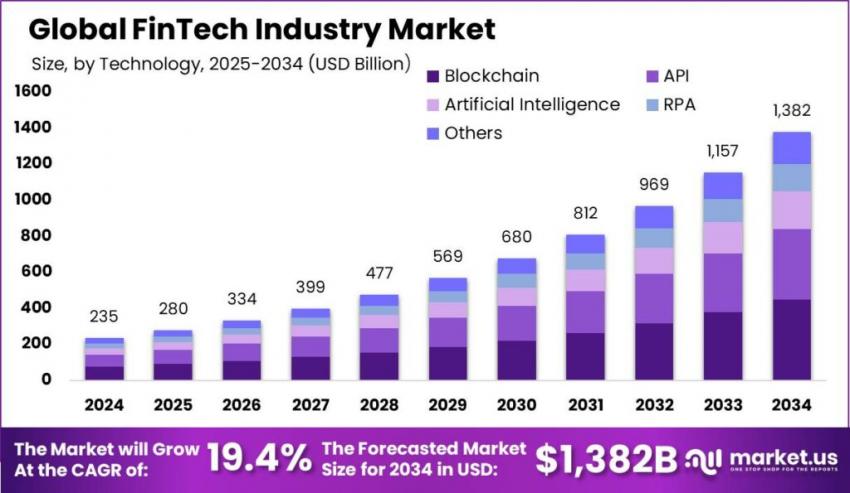
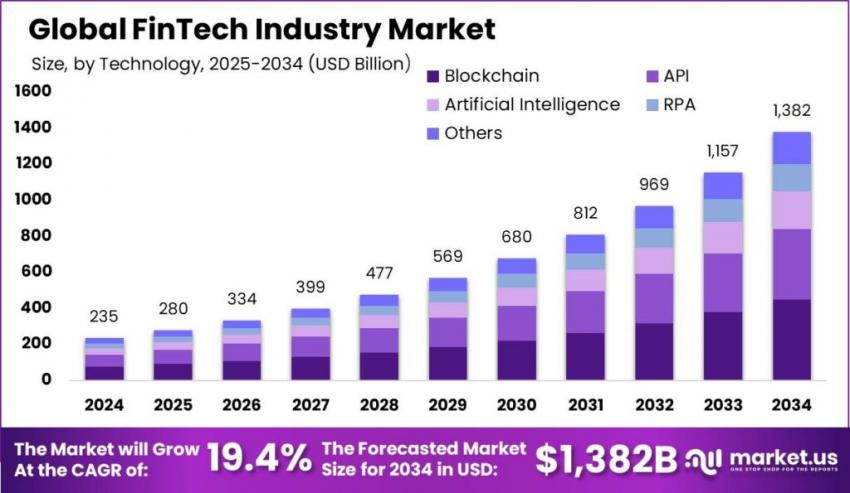
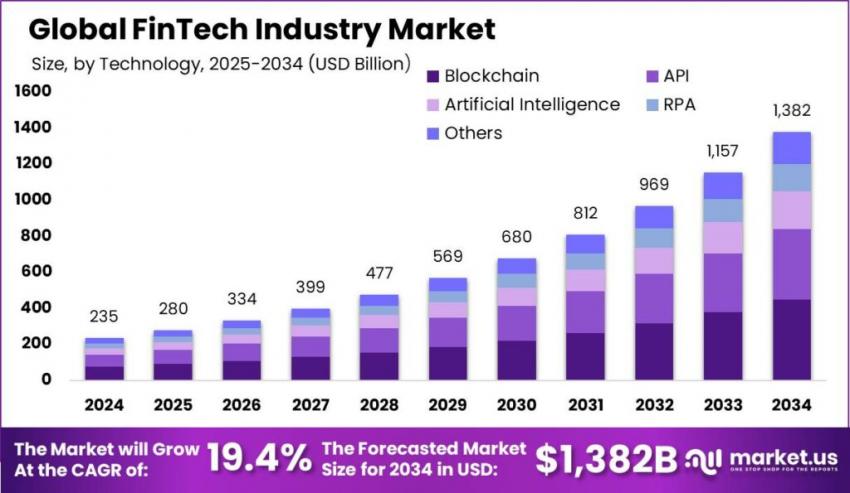
The FinTech Industry Market is rapidly gaining momentum as technology continues to disrupt traditional financial systems. With the rise of digital platforms, consumers now expect seamless, fast, and secure financial services. According to the latest FinTech Industry Market report, the market is projected to grow from USD 234.6 billion in 2024 to approximately USD 1.38 trillion by 2034, at a CAGR of 19.4%.
A major growth driver in the FinTech Industry Market is the increasing use of digital paym... moreThe FinTech Industry Market is rapidly gaining momentum as technology continues to disrupt traditional financial systems. With the rise of digital platforms, consumers now expect seamless, fast, and secure financial services. According to the latest FinTech Industry Market report, the market is projected to grow from USD 234.6 billion in 2024 to approximately USD 1.38 trillion by 2034, at a CAGR of 19.4%.
A major growth driver in the FinTech Industry Market is the increasing use of digital payment solutions. Mobile wallets, UPI systems, and online banking have become integral to everyday transactions, especially in emerging markets. This shift toward a cashless economy is encouraging financial institutions to innovate and adopt advanced technologies.
The FinTech Industry Market report also highlights the growing role of artificial intelligence (AI) in transforming financial services. AI is being used for fraud detection, customer support automation, and personalized financial planning. These capabilities are improving efficiency while enhancing customer satisfaction.
Blockchain technology is another key factor shaping the FinTech Industry Market. Its ability to provide secure and transparent transactions is making it essential for applications such as cross-border payments and decentralized finance. As trust and security become more important, blockchain adoption is expected to increase significantly.
Additionally, the rise of embedded finance is creating new opportunities for businesses to integrate financial services directly into their platforms. This trend is improving user experience and expanding revenue streams.
Despite strong growth, the FinTech Industry Market faces challenges such as regulatory compliance and cybersecurity threats. However, ongoing innovation and investment are expected to address these issues effectively.
In conclusion, the FinTech Industry Market is poised for significant expansion, driven by digital innovation and evolving consumer demands. The insights from the FinTech Industry Market report highlight the vast potential of this sector in shaping the future of global finance.
The Expanding Role of Voice AI Agents in Business Innovation
Innovation is at the heart of every successful business, and voice AI agents are proving to be a major catalyst in this evolution. These advanced systems are transforming how organizations communicate, operate, and deliver value to their customers. By enabling natural, voice-based interactions, businesses can create more engaging and intuitive experiences.
Voice AI agents are especially valuable in handling repetitive and time-consum... moreThe Expanding Role of Voice AI Agents in Business Innovation
Innovation is at the heart of every successful business, and voice AI agents are proving to be a major catalyst in this evolution. These advanced systems are transforming how organizations communicate, operate, and deliver value to their customers. By enabling natural, voice-based interactions, businesses can create more engaging and intuitive experiences.
Voice AI agents are especially valuable in handling repetitive and time-consuming tasks. From answering frequently asked questions to managing appointments and processing requests, these systems help streamline operations and reduce the burden on human teams. This leads to increased efficiency and allows employees to focus on higher-value activities.
Another important aspect of voice AI technology is its ability to adapt and learn over time. With continuous improvements in machine learning and natural language processing, voice AI agents are becoming more accurate and capable of understanding complex conversations. This makes them an ideal solution for businesses looking to enhance both customer experience and operational performance.
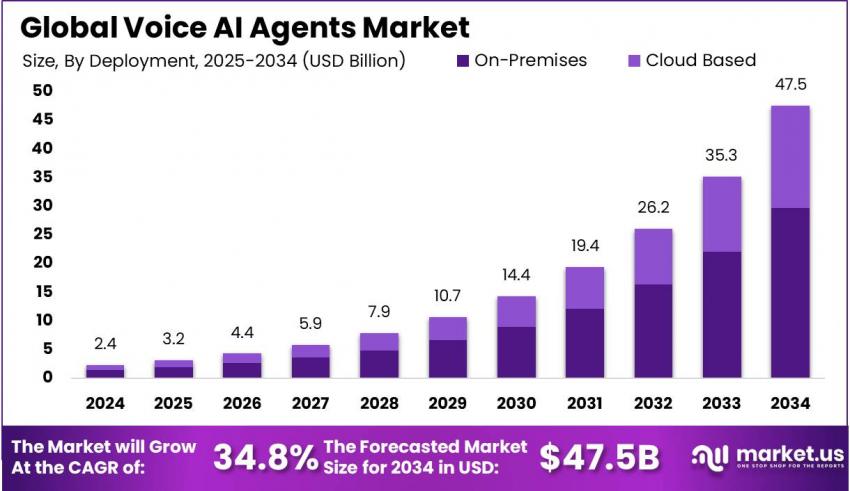
As adoption continues to grow across industries, the Voice AI Agents Market is expected to see significant expansion. Companies that leverage this technology can gain a competitive advantage by offering faster, smarter, and more personalized services.