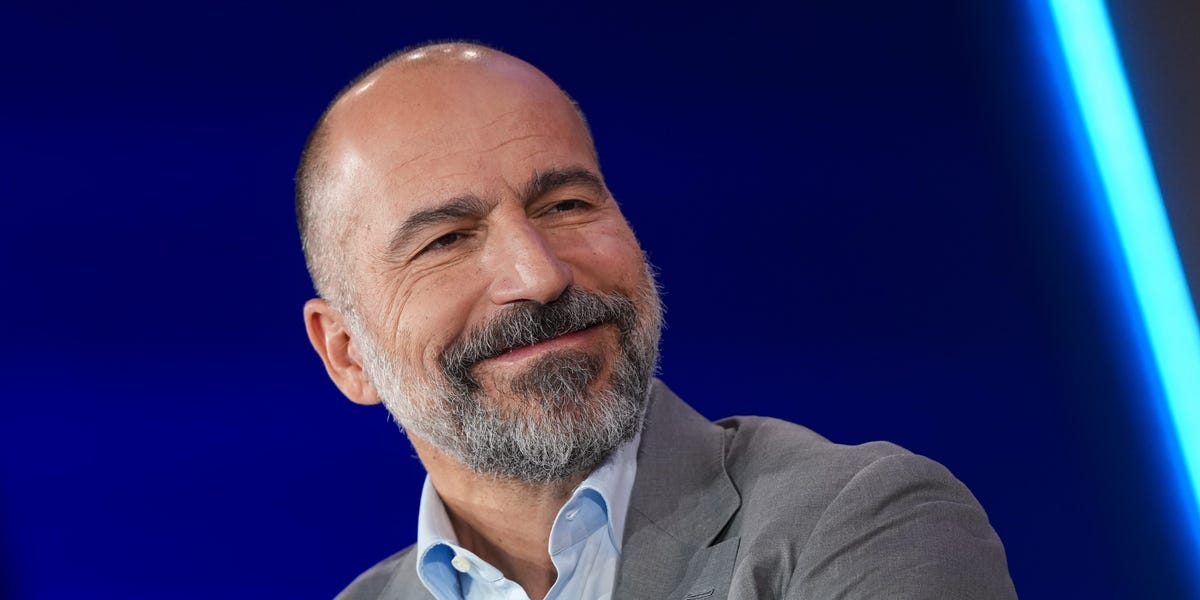
Staff who apply for redundancy do not intend to leave RTÉ, says Bakhurst
Some staff at RTÉ are applying to the ongoing voluntary redundancy packages with “no intention” of leaving, the State broadcaster’s boss has said, writes Muiris Ó Cearbhaill.
Director general Kevin Bakhurst said just 65 people have accepted redundancy packages in the last year, despite there more than 300 applications having been received.
Just two employees who accepted packages came from the newsroom.
The organisation has committed to reducing its workforce by 400 people in the next five years.
As part of a multi-annual funding agreement, brought about after significant financial and governance scandals in 2023, RTÉ has promised to start cutting costs.
Following queries in recent weeks, the broadcaster had repeatedly refused to give exact figures on the number of people who had accepted voluntary exit packages.
Mr Bakhurst and RTÉ’s executive board appeared before the Oireachtas Media Committee yesterday to give an update to the ongoing scheme.
The director general said 308 applications were made to the voluntary exit package, 117 offers were made and 65 people have accepted them.
“The savings from those voluntary exits so far will be €6.2m per annum,” he said.
“So, over a five-year strategy, that’s around €30m.”
A further 30 exits have taken place through retirements and resignations, and the national broadcaster is certain it can reduce the workforce by 100 people by the end of the year.
Mr Bakhurst explained yesterday that RTÉ is facing some difficulty with cutting the roles.
He said some applicants have no intention of leaving.
“Some people put in [an application], unfortunately without a real intention of going,” he said. “I’ve been told that by one or two of the individuals that we made an offer to.
“It’s extremely unfortunate, because every single one of those 117 offers takes an incredible amount of work and it’s been an extremely rigorous process.”
Fine Gael’s Senator Evanne Ní Chuilinn – a former sports presenter on RTÉ – described the groups of people who had no intention to accept an offer as “tyre kickers”.
She asked whether further exit schemes would still be open to that group, or those who had their applications rejected.
Head of human resources Eimear Cusack said that RTÉ was “very open” with people whose applications were rejected.
She explained: “It wasn’t a blunt, ‘You’ve been unsuccessful’. It was, ‘For this particularly scheme, we haven’t been able to facilitate your application. However, it is our intention to run a scheme in 2026.’
“As things change in the organisation over the next number of years, that will allow us to facilitate more people to leave.”
There are certain challenges involved in deciding who to offer packages to, and their specific role and abilities were considered, Mr Bakhurst told the committee.
He cited the fact that 59 applications came from the News and Current Affairs department at the broadcaster, and just two offers were accepted.
Mr Bakhurst said it was difficult to find replacements for staff members, particularly in the newsrooms, and that there are some limitations to the scheme.
He said that in some circumstances, RTÉ is forced to suppress roles to meet its overall target – meaning staff members have their responsibilities reduced until they resign or retire from their job.
Similarly, under the framework of the voluntary exit package scheme – agreed with the Government – roles must be 100% reduced after offers are accepted.
Mr Bakhurst said that this prevents the station from promoting junior staff members to senior positions and added he would like to see the reduction rate be set closer to 75%.
Other cost-saving measures include a plan to rely on the independent production sector to produce most of the content for the stations.
The committee was told that the Lotto draw, Fair City, The Late Late Show and other in-house productions will soon be offered to commercial contractors.
RTÉ intends to only produce news, current affairs, sports, and radio programmes itself in the coming years, the broadcaster’s executive explained.
Mr Bakhurst said this allows the station to get a greater return on investment into the programmes it partners with, as the content is produced externally.
He explained that if RTÉ were to invest €1m per episode into a series, the station would later benefit if the producers sold the series to another broadcaster.
The organisation has committed to reducing its workforce by 400 people in the next five years. (Pic: RollingNews.ie)
“Every million we put in gets multiplied maybe two or three times,” Mr Bakhurst remarked.
“So the Irish audience is getting two or three times the value of that programme… in that way it does multiply the public funding that we get.”
The RTÉ boss, who previously held senior positions at the BBC, said he had not applied for the top job at the British broadcaster after Tim Davie announced his resignation as director general last month.
“I haven’t applied and I’m very happy doing this job, that’s all I can say,” he told the committee.
Photo: Director General of RTE Kevin Bakhurst. Photo: Sasko Lazarov/© RollingNews.ie